

SECURITY FOUNDATION
Designed for tenant isolation, controlled access and traceable activity.
Our approach combines secure sign-in, workspace data separation, controlled integrations and a record of administrative actions.
WHAT IS INCLUDED
A clear path from setup to daily operation.
Every area is designed as a real product workflow rather than an isolated landing-page promise.
01
Organisation-level data isolation
02
Role and permission controls
03
Server-side provider secrets
04
Signed payment webhooks
05
File validation and rate limits
06
Owner MFA in production
BUILT TO OPERATE. BUILT TO GROW.
Explore the complete platform foundation.
Ask the security questions before connecting systems.
The appropriate controls depend on your data, your workflow and the services involved. Confirm requirements during project scoping.
01
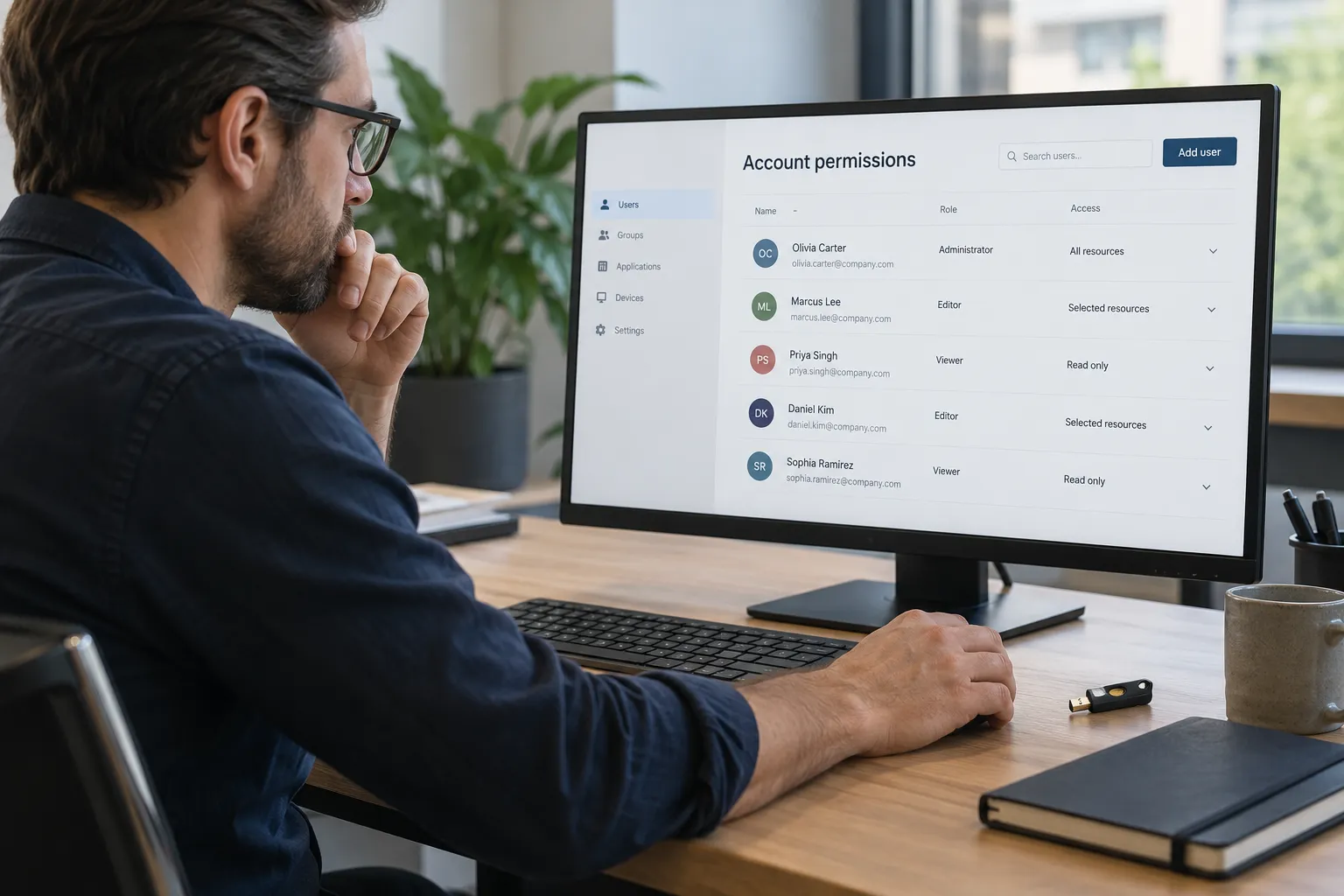
Define access around the work each person needs to do.
List who may view information, change records, approve actions and manage integrations. Where a provider supports scoped access, discuss the permissions needed for the agreed workflow and who owns those connections.
- Identify account owners and authorised team roles.
- Agree which actions require review or approval.
- Plan how access is removed when responsibilities change.

02
Clarify data handling and operational ownership.
Before launch, discuss what information moves between systems, where it is stored and how failures will be reported. Ask which backup, retention and recovery arrangements apply to the actual services in your quotation.
- Document the data fields exchanged by an integration.
- Agree who receives alerts and investigates failed work.
- Review deletion, export and support requirements.
Build an access checklist into project planning.
A connection between systems also creates responsibilities. Make those responsibilities part of the scope before transferring business information.

Name the account owner
Identify who controls each connected account and who may approve permission changes. Shared ownership assumptions can make later maintenance or staff changes difficult.
Limit the information exchanged
List the fields required for the agreed action. Review whether additional information is actually needed and how sensitive records should be handled in examples and testing.
Prepare for changes
Discuss access removal, connection renewal and failure notifications. Ask which arrangements are included in the proposed implementation rather than assuming every control is present.