

BUSINESS OPERATIONS
From agreed work to a job well delivered.
Connect quotations, orders, stock and delivery responsibilities around a clear operational process.

THE DETAILS BEHIND DELIVERY
Business operations
We can scope automation across n8n, Make, Zoho Flow and monday.com, or assess another tool you already use. The right approach depends on the trigger, data permissions, available APIs and the way your team handles exceptions.
Define the handovers between sales and fulfilment, with clear records and responsibilities at each step.
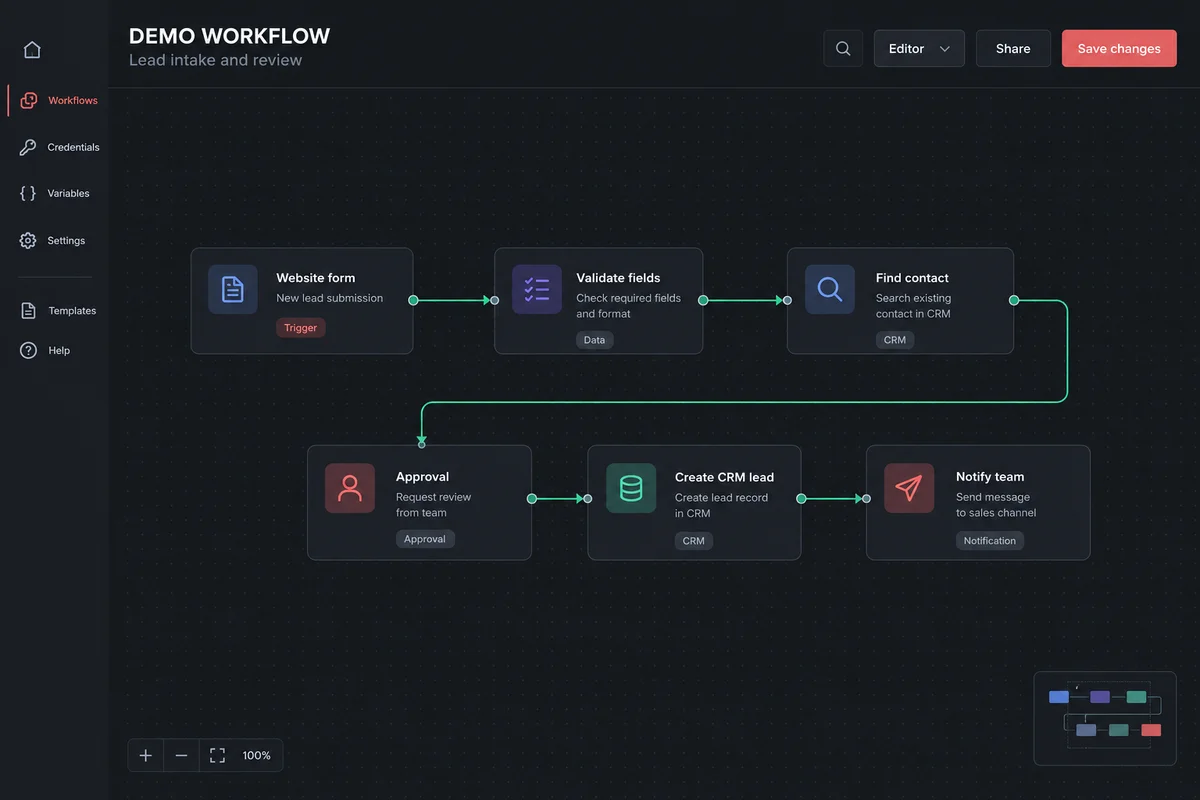
n8n
Follow the lead from enquiry to an approved CRM record.
A form submission starts the example flow. Required fields are checked, an existing contact is searched and an approval step controls when a new lead is created. The final action notifies the responsible team.
Before implementation, we agree how to identify duplicate submissions, handle missing information and record failed actions. The final nodes and credentials depend on your chosen CRM and its API.
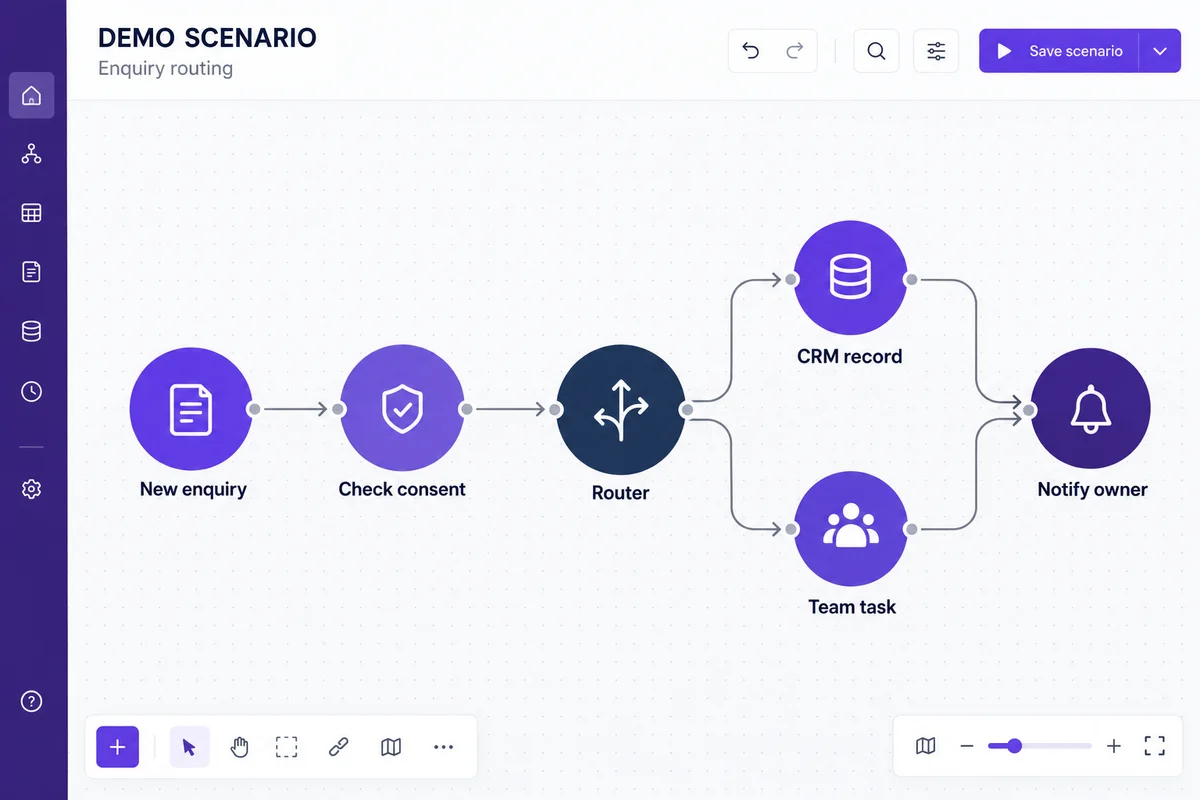
Make
Route one enquiry to the teams that need it.
This example checks the submitted consent and routes the enquiry into a CRM record or a team task. Filters decide which branch runs; an owner notification completes the handoff.
We define the branch conditions, record mappings and failure alerts together. Retrying a scenario should not create duplicate tasks or repeat a customer notification.
Choose the tool around your existing systems.
Zoho Flow can be assessed for workflows connecting your Zoho apps and other services. For monday.com, we review board columns, status changes and the actions your team needs. Native automations, connectors or an API integration may suit different steps.
Platform plans, connector coverage and API permissions are confirmed during scoping. These examples illustrate an approach; they are not a claim that every integration is available on every plan.
HOW WE WORK
A clear process you can review.
Each stage has an agreed output and a named review point. The final scope, schedule and responsibilities are confirmed in your quotation.
Describe the event
Define exactly what starts the process: a form submission, approved record change or schedule. Identify duplicates and situations that must not trigger an action.
Map each system
Agree field mappings and the source of truth. Review connector support, API limits, account permissions and recurring platform costs.
Build for exceptions
Specify approval steps, failure alerts and retry behavior. Decide where human review is safer than repeating an action automatically.
Document and operate
Test representative records and record how to pause, inspect and change the workflow. Agree ownership and ongoing monitoring responsibilities.
PREPARE YOUR BRIEF
Start with the information you already have.
A sample process, existing website or anonymised record is enough to start a useful conversation. Share the outcome you need and the constraints we should consider.
- An example order-to-delivery process
- Product and supplier record samples
- Your approval and handover rules
What we confirm before work starts
- Deliverables, milestones and acceptance checks
- Required accounts, access and third-party costs
- Content, data and approval responsibilities
- Training, handover and ongoing support scope
Existing tools can often remain part of the workflow. We assess the proposed connections before promising compatibility.
Discuss your projectPractical questions before you begin
How is the delivery timeline decided?
We estimate the work after reviewing the scope, existing systems and approval process. Content readiness, data quality and third-party access can affect the schedule.
What happens if the requirements change?
We review the additional work and explain its effect on cost and timing before proceeding. This keeps the agreed launch scope clear.
What will our team receive at handover?
The agreed deliverables, access arrangements and documentation are reviewed together. Training, monitoring and maintenance are included only where specified in the quotation.
Make the handover from approved work explicit.
Operational work needs more than a status label. Agree what is being delivered, the information needed to do it and who owns each transition.

Define readiness
Specify which customer requirements, item details and approvals must be complete before work begins. Record what should happen when the handover is incomplete.
Track meaningful progress
Choose milestones that represent actual work and identify the person responsible for updating them. Include the information needed to explain a delay or changed requirement.
Close with context
Agree which delivery records and follow-up tasks complete the process. The final record should help the team answer later questions without reconstructing separate messages.